


An opportunity to lament—to cry out to God in prayer from our places of confusion, pain, anger, and frustration—drew more than 120 persons to the monastery chapel on a Friday evening in early October for “Lament: An Opening to Hope.”
“A prayer of lament is different than the Liturgy of the Hours that we are most accustomed to,” explained Sister Dorothy Stoner. “The prayer of lament cries out forcefully, expressing confusion, pain, anger, and frustration—the feeling of abandonment of the one who is praying. It expresses our deep sorrow in suffering and injustice. The language is not polite; it is direct and raw. Nor does the prayer end with answers or assurances that ‘all will be well.’ It does, however, offer just a glimpse of hope as it acknowledges the presence of God.”
“Lament: An Opening to Hope,” Sister Dorothy continued, “offered such a movement of turning to God in prayer for participants, of bringing our ‘complaints’ to God, boldly asking God over and over to hear us and respond, and finally, choosing to trust in God.”
Sisters Dorothy, Jean Wolbert, and Chris Kosin proposed the prayer out of their own sense that lament is an appropriate expression of prayer for our time. It also seemed fitting moving into the final months of the Holy Year proclaimed by Pope Francis before his death, to help us refocus our observance of “Jubilee 2025: Pilgrims of Hope,” with a prayer of lament and hope in our monastery chapel.
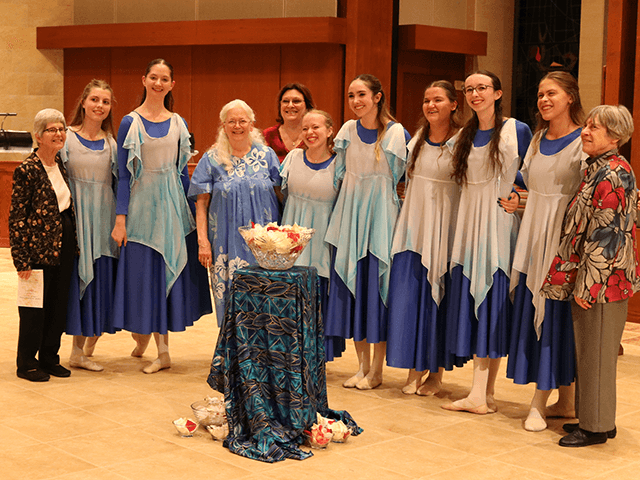
The sisters spent months creating and planning the prayer, choosing psalms, refrains, readings, and responses. They invited the Mercyhurst University Liturgical Dance Ensemble, under the direction of C. Noelle Partusch, to contribute to the prayer. They engaged a number of others, sisters and friends, who also participated in making the prayer experience a true lament by reading testimonies of those who suffer, leading psalms and prayers of lament, and offering musical accompaniment.
“The experience of a lament prayer was inclusive—a lament of the globe: earth, nature, people on the margins,” said Sister Chris. “The opening to hope was also inclusive—word, silence, music, movement, song. To include all is to speak to all.”
Flower petals were strewn in water in the closing reflection. “The petals signified our willingness to lift our stoney hearts of anger and fear to dream a vision of hope for a world of justice and peace. We chose to scatter them in water because water wears away stones,” explained Sister Jean, referring to Ezekiel 36, “I will take turn your stoney hearts into hearts of flesh.” Carl Larese of Larese Floral Design provided the petals. After dropping petals in the water, participants continued to the dining room for a reception.
